Why Sustainability is Shaping the Future of Aluminum Foundry Operations
Wiki Article
Everything About Metal Casting: How Foundries Supply High Quality and Precision in Production
Metal casting stands as a fundamental procedure in manufacturing, where raw metals are changed into details elements. Foundries employ different casting methods to achieve desired attributes and shapes. Each technique features its own collection of advantages and limitations. Comprehending these nuances is necessary for appreciating exactly how high quality and precision are kept throughout the process. The discussion in advance will certainly check out the intricate dynamics of metal casting and its relevance throughout multiple markets.The Essentials of Metal Casting
Metal casting is a basic process in producing that includes forming molten metal into desired forms. This essential strategy begins with the selection of basic materials, often different metal alloys, which are thawed in a heating system. Once the metal gets to the suitable temperature level, it becomes fluid and ready for casting.The process needs a mold and mildew, usually made from sand, metal, or ceramic, which specifies the last shape of the cast item. As soon as the molten metal is put right into the mold and mildew, it cools and strengthens, taking on the mold's contours.
After cooling down, the casting is eliminated from the mold and mildew, and any needed completing processes, such as trimming or brightening, are performed. This approach permits manufacturers to produce complex forms and elements with high precision and minimal waste. Metal casting is commonly made use of throughout various markets, from auto to aerospace, underscoring its relevance in modern production.
Kinds Of Casting Methods
While various casting approaches exist, each technique is and provides one-of-a-kind advantages fit for different applications. Sand casting, among one of the most typical methods, uses sand as the mold and mildew material, enabling big parts and complex layouts. Financial investment casting, recognized for its precision, uses a wax pattern covered in ceramic, making it optimal for intricate geometries. Pass away casting, which entails compeling molten metal into mold and mildews under high stress, is regularly made use of for mass manufacturing of tiny, detailed elements. In addition, shell molding incorporates sand and resin to develop thinner, much more precise mold and mildews, enhancing surface finish. An additional technique, constant casting, enables the production of long sizes of metal shapes, enhancing production processes. Each of these approaches plays a pivotal function in the metal casting sector, addressing specific requirements from production quantity to design intricacy, therefore adding to the diversity of applications throughout various sectors.The Function of Foundries in Production
Foundries serve an essential function in the production landscape, as they change raw metals right into functional components via different casting processes. These centers employ a variety of methods to create items that satisfy precise specifications, consequently making certain high quality and performance in production (Aluminum Foundry). By making use of techniques such as sand casting, investment casting, and pass away casting, factories cater to varied markets, consisting of vehicle, aerospace, and building and construction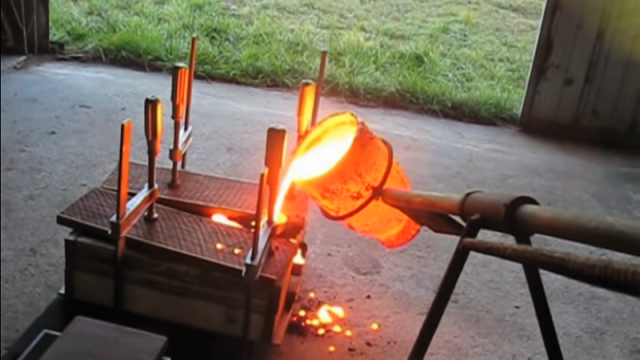
Ultimately, foundries are important to the production ecological community, offering important components that sustain a vast variety of applications and sectors. Their precision and adaptability drive effectiveness in modern manufacturing.
Products Utilized in Metal Casting
The choice of products utilized in metal casting is important for attaining the desired residential or commercial properties and efficiency of the end product. Various steels such as light weight aluminum, bronze, and iron are generally employed, each offering distinct advantages. Light weight aluminum is preferred for its corrosion-resistant and lightweight high qualities, making it optimal for automotive and aerospace applications. Iron, specifically cast iron, is known for its superb fluidity and strength, suitable for heavy machinery and facilities elements. Bronze, with its premium wear resistance, is usually utilized in aquatic environments.Additionally, materials such as silica sand are frequently utilized for mold and mildew making, giving a great balance in between sturdiness and ease of shaping. The option of materials additionally includes additives like changes, which boost the casting procedure by boosting fluidness and minimizing oxidation. Inevitably, the ideal option of these products greatly affects the performance and quality of the casting process.
Quality assurance in the Casting Process
Quality assurance in the casting process is necessary to ensure that end products meet market standards and specifications. Various evaluation techniques are employed to identify defects and assess the integrity of actors parts. Furthermore, adherence to developed accreditations and requirements boosts the integrity and efficiency of actors products.Examination Techniques Employed
Maintaining the integrity of cast metal parts counts greatly on various assessment methods. Foundries utilize visual inspections as a preliminary step to identify surface defects, such as cracks or inclusions. Non-destructive screening (NDT) methods, consisting of ultrasonic testing and radiographic inspection, are essential for detecting inner defects without jeopardizing the element's stability. Dimensional evaluations utilizing calipers and coordinate measuring equipments validate that parts satisfy defined resistances. Furthermore, chemical analysis validates that the alloy structure aligns with needed standards. These inspection strategies jointly verify that the castings meet the required high quality and performance standards, inevitably minimizing the threat of failure in their desired applications. Carrying out these rigorous inspections is basic for maintaining high criteria in metal casting manufacturing.Standards and Certifications
Requirements and accreditations play a vital function in the top quality control of the casting process. Foundries abide by different global and industry-specific requirements, such as ISO 9001 and ASTM standards, assuring consistency and dependability in their items. These standards detail the required standards for materials, production techniques, and screening treatments, adding to a more reliable manufacturing process. Qualifications, such as AS9100 for aerospace applications, even more highlight the importance of top quality guarantee in specialized industries. By acquiring these qualifications, foundries show their dedication to quality, lowering issues and improving client contentment. Regular audits and assessments validate conformity, fostering constant renovation and technology within the industry. Eventually, adherence to established standards cultivates depend on in between manufacturers and customers.Developments in Casting Technology

3D Printing Integration
Integrating 3D printing modern technology into metal casting processes is transforming the manufacturing landscape. This ingenious blend improves the layout and production of complicated geometries that traditional techniques battle to achieve. By employing additive manufacturing for producing cores and mold and mildews, foundries can significantly minimize preparations and product waste. 3D printing allows for quick prototyping, enabling producers to check designs rapidly and effectively, thereby facilitating repetitive renovations. This technology also supports the manufacturing of lightweight parts, which are vital in industries like aerospace and vehicle. Therefore, the combination of 3D printing not just enhances procedures but likewise boosts the precision and top quality of cast metal items, noting a noteworthy development in the market.Automated Manufacturing Processes
The innovations in 3D printing have actually led the way for more technologies in automated production procedures within metal casting. Foundries are significantly taking on robotics and automation to enhance efficiency and precision. Automated systems streamline the whole casting process, from mold and mildew development to finishing and putting. Smart sensing units and real-time surveillance permit specific control of temperatures and product flow, decreasing waste and boosting high quality. In addition, software application solutions promote far better design and simulation, allowing manufacturers to maximize processes before manufacturing begins. These computerized manufacturing processes not just reduce labor costs however also minimize human error, making sure constant output. Because of this, the combination of sophisticated technologies in metal casting is reinventing manufacturing abilities and meeting the growing demands of numerous industries.Advanced Product Development
As markets require greater performance and sustainability, innovations in material advancement for metal casting are arising as an important focus. Designers and scientists are exploring new alloys and composites that boost mechanical residential or commercial properties while lowering ecological influence. Innovations include lightweight materials that maintain toughness, making it possible for much better gas effectiveness in transportation applications. Furthermore, the consolidation of recycled products is ending up being a lot more widespread, lining up with sustainability goals. Advanced casting techniques, such as 3D printing and precision molding, enable the production of complex geometries that standard techniques can not achieve. These growths not just improve the functionality of cast components however additionally improve manufacturing efficiency. On the whole, the constant development of material scientific research drives the future of metal casting, meeting the demands of contemporary sectors.
Applications of Metal Casting Throughout Industries
Metal casting plays an important role in various industries, as it allows for the manufacturing of intricate forms and top notch components with relative effectiveness - Metal Casting. In the automobile industry, cast metals are vital for developing engine blocks, transmission situations, and various other important parts that call for durability and precision. Aerospace sectors make use of metal casting for parts like wind turbine blades and architectural aspects, where reliability is paramountIn addition, equipment and devices manufacturing take advantage of metal casting by generating gears, real estates, and other complex components that boost performance. The building industry additionally employs metal casting for building features, architectural supports, and installations, showcasing adaptability.
The medical area depends on cast steels for surgical instruments and implants, highlighting the need for biocompatibility. Overall, metal casting is a foundational process throughout multiple fields, offering services that meet rigid top quality requirements and efficiency demands.
Regularly Asked Concerns
What Security Actions Are Taken in Metal Casting Foundries?
In metal casting factories, precaution consist of safety gear, air flow systems, routine equipment upkeep, employee training, and emergency situation methods to mitigate risks connected with high temperature levels, dangerous materials, and possible crashes during the casting procedure.Exactly How Do Foundries Take Care Of Waste and Environmental Influence?
Foundries take care of waste and ecological effect via reusing products, implementing filtering systems for discharges, and sticking to regulations - Aluminum Foundry. They likewise embrace lasting techniques, such as reducing energy consumption and utilizing environmentally friendly compounds in their processesWhat Are the Costs Related To Metal Casting Procedures?
The expenses connected with metal casting processes include raw materials, labor, equipment maintenance, power consumption, and waste administration. Additionally, variations in market value and conformity with environmental guidelines can greatly influence general expenses for shops.Just How Does Metal Casting Contrast to Other Production Methods?
Metal casting supplies unique benefits, such as intricate shapes and high product efficiency, compared to approaches like machining or stamping. It might include longer lead times and greater preliminary expenses, depending on project requirements.
What Occupation Opportunities Exist in the Metal Casting Industry?
The metal casting sector provides different profession opportunities, consisting of factory monitoring, procedure engineering, high quality assurance, mold and mildew style, and maker operation. Professionals can likewise go after functions in r & d, sales, and environmental health and safety.Metal casting stands as a foundational process in manufacturing, where raw metals are changed into details parts. Metal casting is an essential process in making that entails shaping liquified metal right into desired types. An additional method, continual casting, allows the manufacturing of long lengths of metal forms, improving manufacturing procedures. The costs linked with metal casting processes include raw materials, labor, devices upkeep, power consumption, and waste management. The metal casting market click here uses numerous job opportunities, including factory monitoring, procedure engineering, quality assurance, mold design, and device operation.
Report this wiki page